
Earlier today, one of my Ecommerce colleagues on LinkedIn, Don Brett, Founder of the Retail eCommerce Club, shared his insights on a tremendous report by the team at Forrester providing detailed coverage of the core factors that define digital route to market readiness.
I find these insights so useful because it gives me useful information to see how other organizations strategize, plan and execute on their digital transformations which I can learn from. And second, it validates some of my work I’ve done in my past and what I’m doing today at Visions as I continue to lead them through their digital transformation.
Here are some of Don’s highlights:
Fun Facts: (3)
🚘 ~33% — “Digital routes to market, including e-commerce and online marketplaces, now represent a third of B2B purchases, and more growth is expected. This makes the transition to winning, serving, and retaining customers through both online and offline channels an urgent strategic priority.
🚘 ~41% – “B2B leaders say digital sales channels are their most effective sales route (41%), beating in-person (37%) and video (31%).
🚘 “The bottom line is that organizations that lack a digital sales strategy are most likely failing to meet the needs of their customers, and the longer they hold off on creating one, the more likely they are to lose customers to the competition.”
Key Messages: (2)
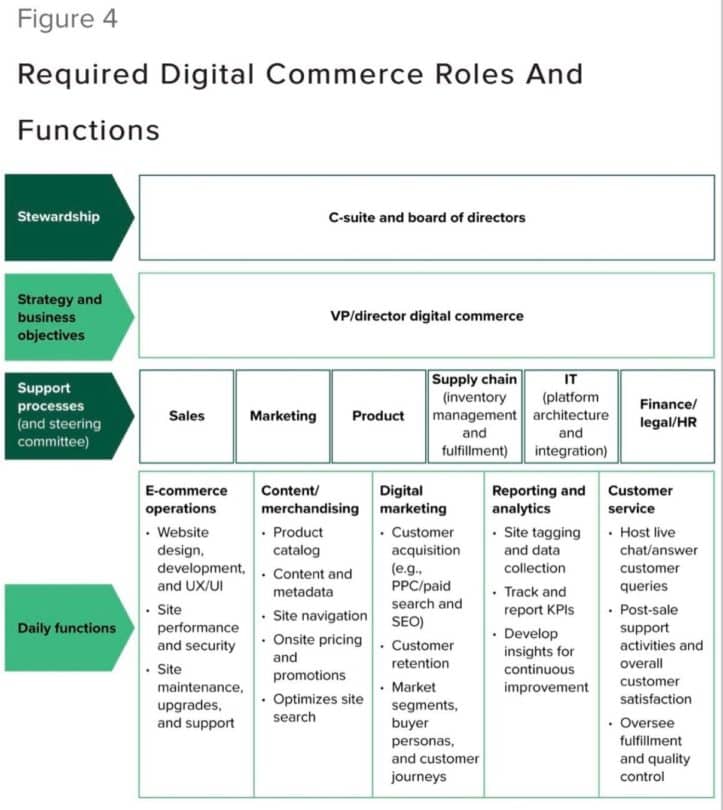
🍿Required Digital Commerce Roles and Functions
- Stewardship
- Strategy & Business Objectives
- Support Processes & Steering Committee
- Daily Functions
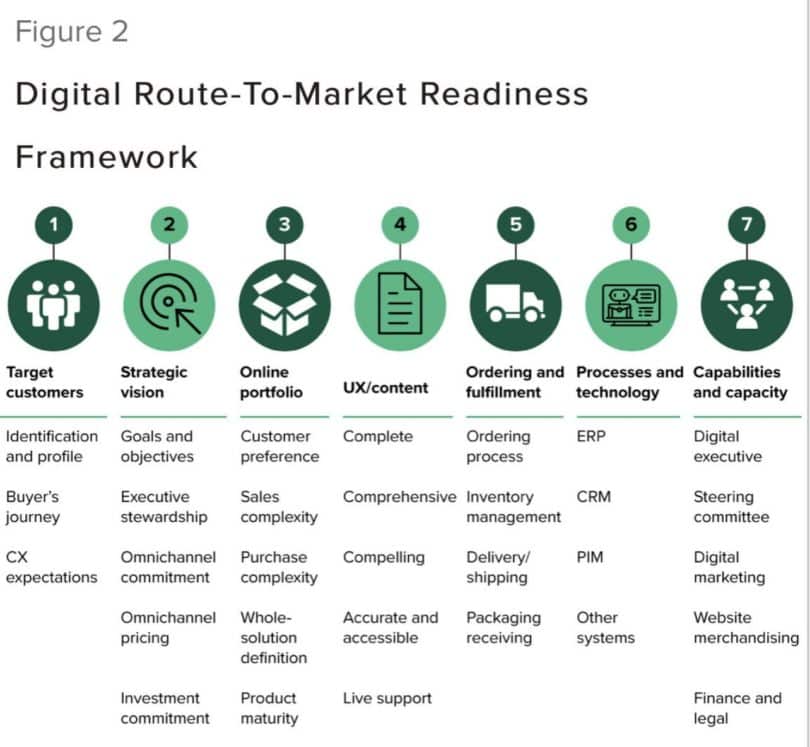
🍿7-Part Digital Route to Market framework
- Target Customers
- Strategic Vision
- Online Portfolio
- UX/Content
- Ordering & Fulfillment
- Process & Technology
- Capabilities and Capacity
#digital #ecommerce #retailmedia #retail #amazon #omnichannel #remex #walmart #customerexperience #strategy #cpg #privatequity #leadership #commerceclub
Leave a Reply